The best Arcane Odyssey chest locations are not always the rarest-looking islands. A strong route combines chest density, travel time, return-path clarity, respawn expectations, Treasure Chart opportunities, and your current reward goal. Use reliable loops first, then add sealed or dark chest detours when they are worth the handling time.
Updated September 8, 2026. Chest behavior, rewards, and route value can change with game updates.
Arcane Odyssey Chest Locations: Best Loot Routes
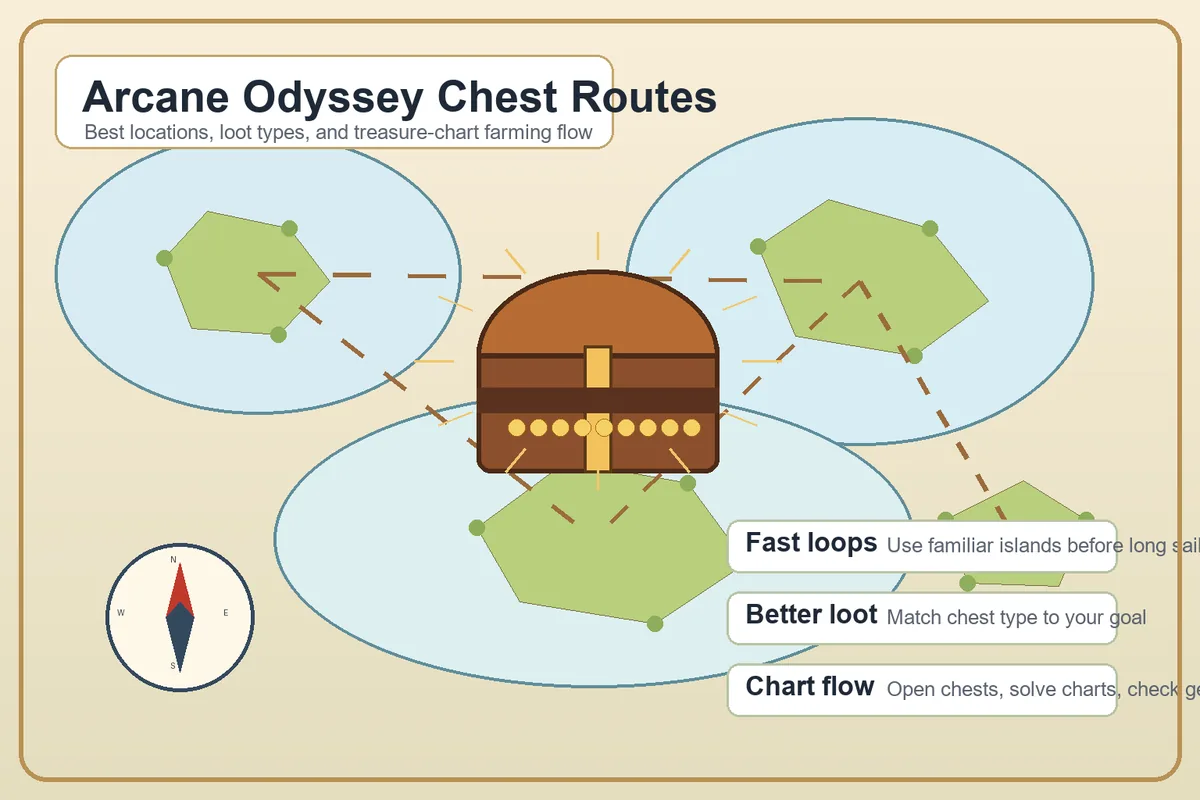
Quick answer: how to choose a chest route
Start with a familiar island or short island chain that you can complete without checking a guide at every turn. Count how many useful chests you can reach, how often the route forces a long climb or return trip, and whether the loop still feels worthwhile when a rare chest does not appear. A repeatable normal-chest loop is often a better base than a route that depends on one legendary spawn.
Chest route decisions at a glance
| Chest or route type | Best use | What to measure | Do not assume |
|---|---|---|---|
| Normal chests | Repeatable baseline farming, exploration, and route practice. | Density, travel time, safe return path, and how much terrain you can remember. | That a longer route is automatically better because it contains more names. |
| Legendary Chests | Bonus rewards while running a route that is already efficient. | Whether the detour costs more time than your reward goal supports. | That every loop will contain one or that the route should depend on it. |
| Sealed Chests | Ship parts, blueprints, scrolls, or stronger reward tables when available. | Carrying, opening, and return time in addition to sailing distance. | That the extra handling is free or fits every build and route. |
| Dark Sealed Chests | Specialized or higher-risk runs where the reward justifies preparation. | Hazard, navigation, storage, and the cost of leaving the normal loop. | That a dark chest is the best general-purpose farming target. |
How to build an efficient Arcane Odyssey chest loop
- Pick a starting point. Choose a dock, settlement, or shoreline landmark you can recognize quickly.
- Map the shortest useful sweep. Visit the most reliable chest locations before adding remote corners.
- Separate the main loop from detours. Mark sealed, vertical, or rare-chest branches as optional.
- Plan the return. A route that ends far from your ship may erase the time saved by one extra chest.
- Keep a reset rule. When the loop becomes slow, return to the starting point instead of improvising indefinitely.
Think in terms of time per useful check, not just chest count. A dense route with confusing elevation can be slower than a smaller loop with obvious landmarks. When learning a new island, run it once for navigation and only then decide whether its chest locations belong in your regular rotation.
Normal, legendary, sealed, and dark sealed chests
These categories answer different farming questions. Normal chests are the foundation because their value comes from repetition. Legendary Chests can improve a run, but their rarity makes them a poor guarantee for route planning. Sealed Chests may need additional handling or a ship-based decision, so count the full detour rather than only the opening animation. Dark Sealed Chests belong to a more specialized risk and preparation conversation.
For routine loot
Use normal chest locations and familiar islands. The goal is a route that remains useful when the rare outcome does not happen.
For rare rewards
Add a legendary or sealed branch after the baseline route works. If the branch makes the whole loop too slow, keep it separate.
For ship-related rewards
Compare the reward goal with carrying, opening, sailing, and returning. A route can be profitable only when the complete trip is considered.
For charts
Connect chest farming with the Treasure Chart Guide, but do not promise a fixed chart rate or force every route to serve two goals.
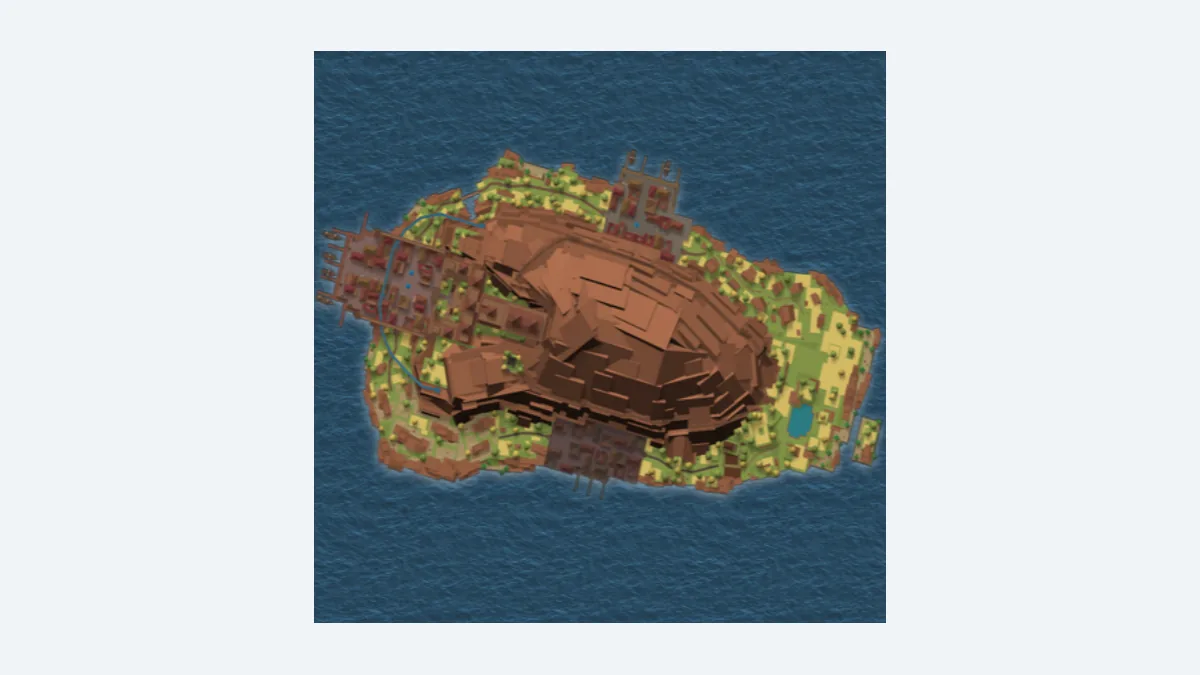
Bronze Sea versus Nimbus Sea chest routes
Bronze Sea is a comfortable place to learn route memory because many players already recognize its broad landmarks. Use it to test whether a loop is repeatable, how quickly you can return to your ship, and which terrain types slow you down. The Island Guide can help you choose an island by route purpose rather than by name alone.
Nimbus Sea routes can be worthwhile when you have a clear target, but larger hubs and longer travel gaps make route design more important. Decide whether the run is for chests, a chart, a quest, or a specialized reward before sailing. If the target is a named island, use the map and current quest marker for the final approach rather than assuming an old route is unchanged.
How chest routes support Treasure Chart farming
Chest and exploration loops are natural places to look for Treasure Charts because they keep you moving through multiple islands and surfaces. The efficient approach is to keep the loop useful even when no chart appears. When a chart does appear, pause and decide whether its island is nearby, whether the clue is worth solving now, and whether finishing the current loop will make the next trip cleaner.
When you do solve the chart, start with the exact island and use the Treasure Chart Locator for direction and distance. Chest routes and chart-solving routes overlap, but they are not the same task. A chest loop should optimize repeat movement; a chart search should optimize clue accuracy and terrain checks.
Common chest farming mistakes
- Choosing by rarity alone: a rare chest is not valuable if the detour breaks the route.
- Ignoring return time: measure the trip back to the ship or next island.
- Mixing every reward goal: separate normal loot, ship rewards, charts, and progression when the route becomes confusing.
- Assuming old information is permanent: reward tables and access rules can change after updates.
- Resetting too late: once a loop loses its landmarks, return to the start and rebuild it deliberately.
FAQ
What are the best Arcane Odyssey chest locations?
The best location is the route you can repeat with useful chest density and a short return path. Start with a familiar loop, then add rare or sealed branches when the reward justifies them.
Are Sealed Chests worth farming in Arcane Odyssey?
They can be worthwhile when ship parts, blueprints, scrolls, or stronger reward tables match your goal. Count carrying, opening, sailing, and return time before adding them to every loop.
How rare are Legendary Chests?
Treat them as uncommon bonuses rather than guaranteed stops. A good route should remain useful when the legendary chest does not appear.
Do chest routes help you get Treasure Charts?
Chest and exploration loops are useful places to look for charts, but the exact chance can change. Keep the route efficient even when a chart does not appear.
Should I farm normal chests or dark sealed chests?
Choose normal chests for repeatable general farming and dark sealed chests for a specialized reward or risk goal. They solve different route problems, so compare the complete trip instead of only the chest label.
Where should I learn more about treasure clues?
Read the Arcane Odyssey Treasure Chart Guide, then use the locator when you have a specific island, direction, and distance.
Sources and update note
This page uses project-owned map and chest visuals and keeps reward language cautious because live game tables can change. Use the official game listing for the current experience and community references for terminology, not as a guarantee of a permanent drop rate.