
Arcane Odyssey Classes Guide: All Stat Builds Explained
Arcane Odyssey classes are not chosen from a menu. Your class comes from how you invest stats, so the best class is the one whose unlocks, combat rhythm, and gear support match how you actually play.
Published | Updated | By Arcane Tools Editorial Team
Fast answer
Choose a pure class when you want one clear combat identity. Choose a hybrid when two stat paths genuinely support each other.
After choosing the class path, use the Armor Build Calculator to make the stats feel playable.
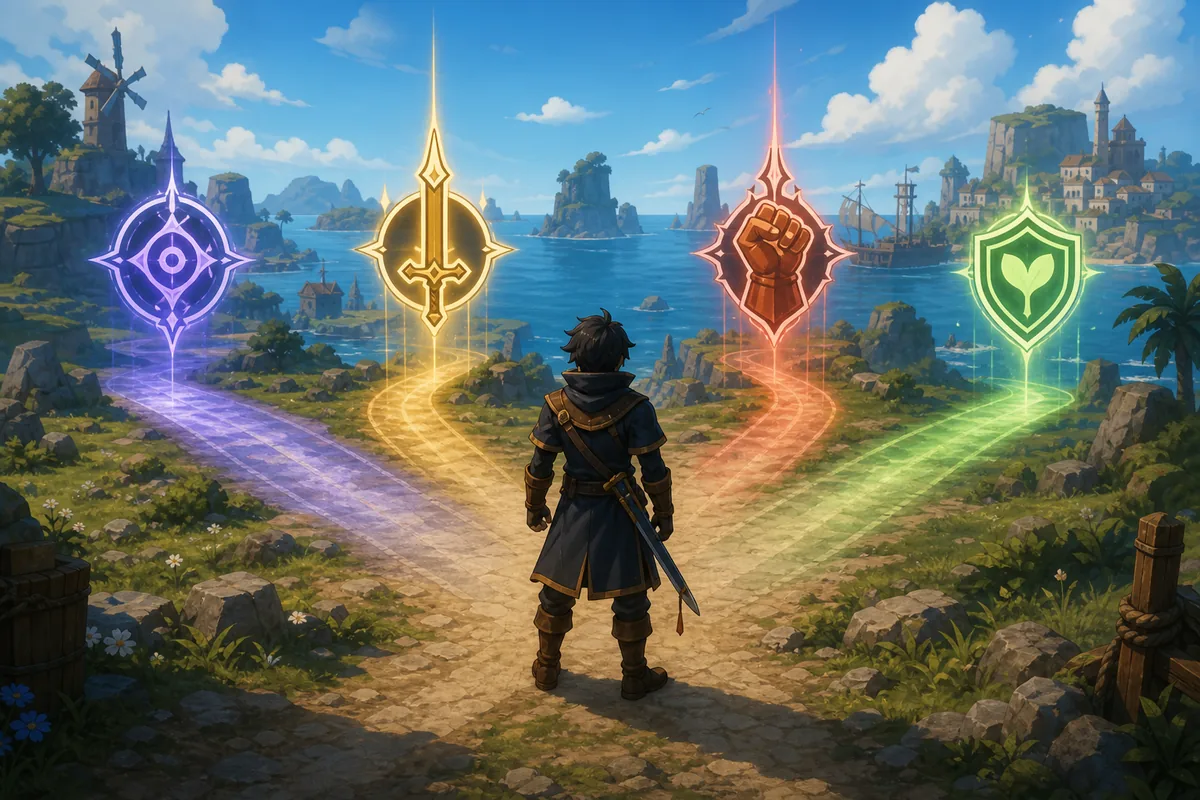
Searchers looking for Arcane Odyssey classes usually need a practical map of the stat-build system, not another raw wiki list. They want to know what Mage, Berserker, Warrior, Oracle, Conjurer, Warlock, Warlord, and Savant actually mean before spending points.
This guide keeps the decision grounded in playstyle. If your question is specifically about spell choice, open the Magic Guide. If your route is Strength-first, compare styles in the Fighting Styles Guide. If your class already exists and you need better gear support, go straight to the Armor Build Calculator.
How Arcane Odyssey Classes Work
Arcane Odyssey class identity follows your stat investment. The important stat families are Magic, Strength, Weapons, and Spirit. A pure route leans mostly into one family. A hybrid route combines two families. Savant-style routes spread wider and trade clean power for broader access.
That means class choice should start with a question: what do you want your moment-to-moment combat to feel like? Spells reward spacing, status knowledge, and shape control. Fighting styles reward rhythm, pressure, and comfort in close range. Weapons reward timing and skill access. Spirit routes require extra attention to the current game state because Spirit mechanics and build value are more update-sensitive than evergreen route planning.
Class planning rule
Do not pick a class because the name looks strongest. Pick the stat path you will actually practice, then support it with armor, jewels, enchantments, and the right content route.
All Arcane Odyssey Classes and Stat Paths
The table below is a decision guide, not a promise that every class is equally strong in every update. Use it to identify the job of each class, then verify exact stat thresholds and unlocks in current game references before spending points.
| Class | Main stat path | Best fit | Planning note |
|---|---|---|---|
| Mage | Mostly Magic | Players who want spells, status pressure, range control, and magic pairings. | Pair this with the Magic Guide before committing to a second magic. |
| Berserker | Mostly Strength | Players who want fighting styles, close-range pressure, and straightforward stat identity. | Pair this with the Fighting Styles Guide before choosing a style. |
| Warrior | Mostly Weapons | Players who want weapon skill access and weapon-first combat rhythm. | Works best when you enjoy weapon swapping and timing more than spell planning. |
| Oracle | Mostly Spirit | Players who want a Spirit-focused route and are willing to track current Spirit mechanics carefully. | Check current game/wiki notes because Spirit details can change with updates. |
| Conjurer | Magic + Weapons | Players who want spell pressure with weapon follow-up and flexible range changes. | Good when you like both ranged magic and precise weapon openings. |
| Warlock | Magic + Strength | Players who want magic status effects plus fighting style pressure. | A strong fit when your style and magic rhythm reinforce each other. |
| Paladin | Magic + Spirit | Players who want magic identity with Spirit-side utility or survivability planning. | Best treated as a deliberate hybrid, not a fallback Mage. |
| Warlord | Strength + Weapons | Players who want weapon openings plus fighting style pressure. | Choose it if you like direct combat and can tune armor for commitment. |
| Juggernaut | Strength + Spirit | Players who want close-range pressure with Spirit-side durability or utility. | Plan carefully because both sides need enough points to feel real. |
| Knight | Weapons + Spirit | Players who want weapon combat supported by Spirit-side options. | Avoid spreading points so thin that weapon skills arrive too late. |
| Savant | Three or more stats | Players who understand tradeoffs and want broad access instead of a clean two-stat plan. | Harder to recommend early because every point has an opportunity cost. |
Pure Classes vs Hybrid Classes
Pure classes are easier to read because most of your points support one unlock path. Mage, Berserker, Warrior, and Oracle-style routes answer the same question clearly: "What is my main way to fight?" That clarity is valuable for beginners because mistakes are easier to diagnose.
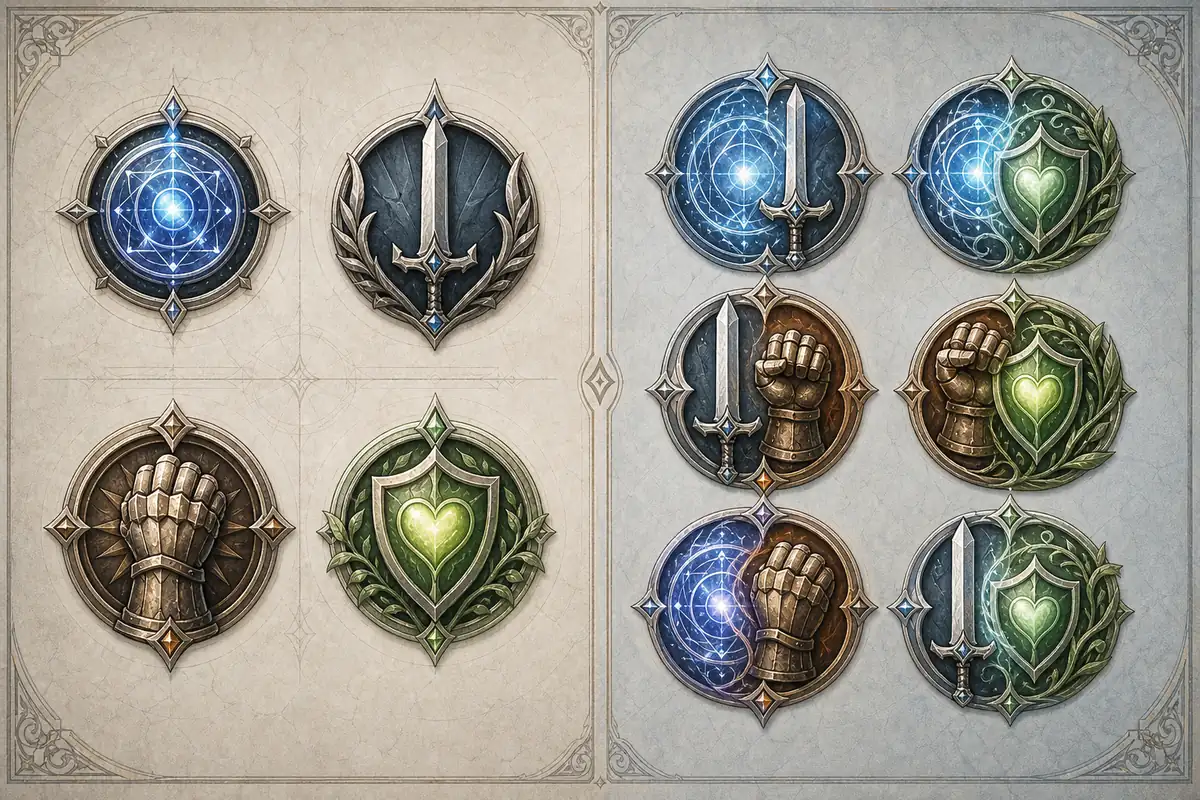
Hybrid classes are more flexible but less forgiving. Conjurer, Warlock, Paladin, Warlord, Juggernaut, and Knight can feel excellent when both halves are useful. They can also feel weak if one half only exists on paper. Before choosing a hybrid, ask whether you will actively use both sides in the same fight.
Savant is the special case. It can look attractive because it promises access to many tools, but every extra stat direction makes each individual unlock path thinner. For most players, Savant should come after you understand why a simpler pure or two-stat hybrid is not enough.
How to Choose the Right Class
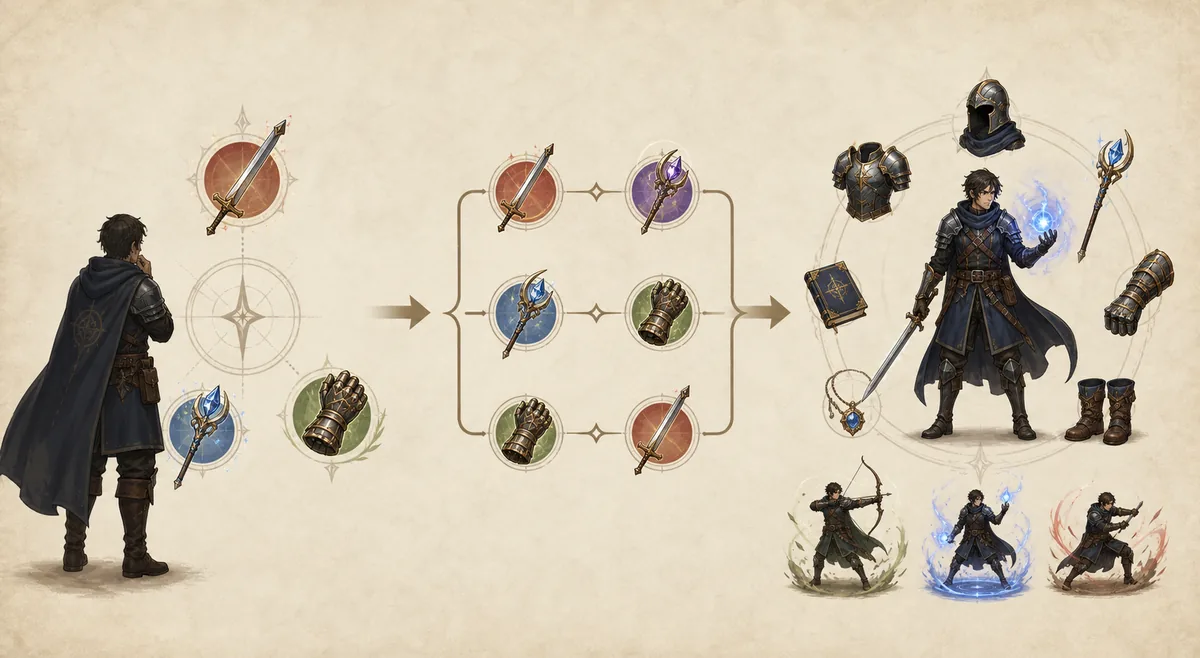
Start from playstyle, then check stat support, then check gear. A class that looks perfect in a guide can still feel bad if your armor makes you too slow, too fragile, too short-ranged, or too dependent on one attack shape. That is why class choice and gear choice should be treated as one workflow.
| Situation | Best class direction | Reason |
|---|---|---|
| You are new and want low confusion | Start with Mage, Berserker, Warrior, or a clear two-stat hybrid. | A clean identity teaches timing faster than a scattered build. |
| You already like magic | Compare Mage, Conjurer, Warlock, and Paladin. | The right choice depends on whether your second pillar is Weapons, Strength, or Spirit. |
| You already like fighting styles | Compare Berserker, Warlock, Warlord, and Juggernaut. | Strength feels different when it is pure versus paired with magic, weapons, or Spirit. |
| You want weapon skills | Compare Warrior, Conjurer, Warlord, and Knight. | Weapon access should be planned around the skills you actually want to unlock. |
| You want maximum flexibility | Study Savant last, not first. | Flexibility is useful only when you understand what each missed threshold costs. |
Where Arcane Tools Fits Into Class Planning
This page gives the class map. The rest of the site helps with narrower decisions. Use the Arcane Odyssey Magic Guide when the choice is Mage, Conjurer, Warlock, or Paladin and you need starter magic or pairing logic. Use the Fighting Styles Guide when the route includes Strength and you need to choose Basic Combat, Boxing, Iron Leg, Sailor Style, Cannon Fist, or Thermo Fist.
Use the Armor Build Calculator after the class path is clear. For example, a Warlock may need enough speed and defense to stay active in close range, while a Mage may value range, size, power, or safer defensive stats depending on spell shape. If you are farming gear for that class, the Treasure Chart Locator and Chest Locations Guide can help you turn route time into more useful drops.
Common Class Choice Mistakes
Most bad class choices come from choosing too early, choosing from a name, or copying a build without understanding the tradeoff. Use this table before you commit points or rebuild around a guide you found elsewhere.
| Mistake | Why it hurts | Better habit |
|---|---|---|
| Choosing by name only | Class names sound cool, but the stat split determines what skills and tools you can use. | Pick by combat rhythm first, then name. |
| Copying a tier list blindly | Tier lists cannot know your ping, favorite weapon, magic shape, armor stats, or practice level. | Use tier lists as prompts, not orders. |
| Over-spreading points early | A little of every stat can delay the tools that make the build work. | Keep early builds simple until you know the unlock path. |
| Ignoring armor support | Power, defense, speed, agility, range, size, resistance, and regeneration change how a class feels. | Use the Armor Build Calculator after choosing the class path. |
| Changing the build before testing it | Some classes feel weak until the core skill, style, or gear loop is in place. | Test the intended loop before abandoning the route. |
Reference Sources Checked
I checked official game context and current community reference pages for class naming and stat-build framing. The visuals on this page are AI-generated editorial illustrations made for explanation; they are not official screenshots, gameplay captures, or copied community media.
FAQ
What is the best Arcane Odyssey class?
There is no permanent best Arcane Odyssey class for every player. Mage, Berserker, Warrior, Conjurer, Warlock, Warlord, and other paths all depend on your preferred range, timing, stat investment, and gear support.
What class should a beginner choose in Arcane Odyssey?
Beginners should usually choose a clean identity: Mage if they like spells, Berserker if they like fighting styles, Warrior if they like weapon skills, or a simple hybrid such as Conjurer, Warlock, or Warlord if they already know both sides.
Is Savant good in Arcane Odyssey?
Savant can be interesting, but it is harder to recommend as a first build because spreading points across several stats delays stronger unlocks. Treat Savant as an advanced planning route, not the safest beginner answer.
Are classes permanent?
Class identity follows your stat investment. Because updates and respec options can change how flexible a route feels, plan from current game information and avoid spending points just because a class name sounds strong.
How do armor stats affect class choice?
Armor does not change your class name, but it changes how the class performs. Power, defense, speed, agility, range, size, resistance, and regeneration can make the same class feel safe, fast, fragile, or hard to land.
Final Takeaway
The best Arcane Odyssey class is the class whose stat path you can practice and support. Pick a clean combat identity, avoid spreading points just because every tool looks useful, then tune armor and route planning around the class you actually enjoy playing.