
Arcane Odyssey Dark Sea Guide: Preparation, Ranges, Loot, and Dark Sealed Chests
The Dark Sea is where Arcane Odyssey turns normal sailing into a risk-management run. Prepare the ship, choose a sane range, decide what loot is worth chasing, and leave before a good voyage becomes an expensive mistake.
Published | Updated | By Arcane Tools Editorial Team
Fast answer
For your first Dark Sea run, stay near the edge, bring repair and recovery resources, check only a few opportunities, and return while your ship is still healthy.
Use the Armor Build Calculator before deeper runs so Warding, defense, mobility, and damage match the risk.

A good Arcane Odyssey Dark Sea guide should answer a different question from a normal map page. The reader usually knows the Dark Sea is dangerous; the missing piece is how to prepare, how far to sail, what loot is worth risking the ship for, and when to turn back.
This page is not a static Dark Sea map. The search intent is broader: players want to know how to enter, how far to push, what insanity changes, which loot matters, and when to leave. That intent is separate from the Treasure Chart Locator, Map Guide, Dark Sea Map and Navigation Guide, Chest Locations Guide, and Armor Build Calculator, but it naturally links to all five.
What Is the Dark Sea in Arcane Odyssey?
The Dark Sea is the dangerous outer ocean around the normal War Seas. You enter it by sailing outward into the dark fog at the edge of the map, then you deal with worse visibility, rougher travel decisions, stronger hazards, and a reward loop built around Dark Sea islands, structures, Atlantean encounters, reagents, ship rewards, and Dark Sealed Chests.
The important shift is that the Dark Sea is not a normal island route. In the Bronze Sea or Nimbus Sea, a mistake often costs time. In the Dark Sea, the same mistake can cost the whole haul because you still need to leave safely. That means the run should be planned backward: decide what would make you leave, then decide how far to push.
Core rule
A Dark Sea run is successful when the loot reaches a Shipwright or your inventory safely. Unopened reward potential inside the storm does not count until you extract.
Dark Sea Preparation Checklist
Preparation matters more than bravery. Before leaving normal waters, check ship condition, repair supplies, food, healing, build comfort, inventory space, and whether your current session is stable enough for a longer run. If you are distracted, under-geared, or experimenting with a new build, keep the first run shallow.
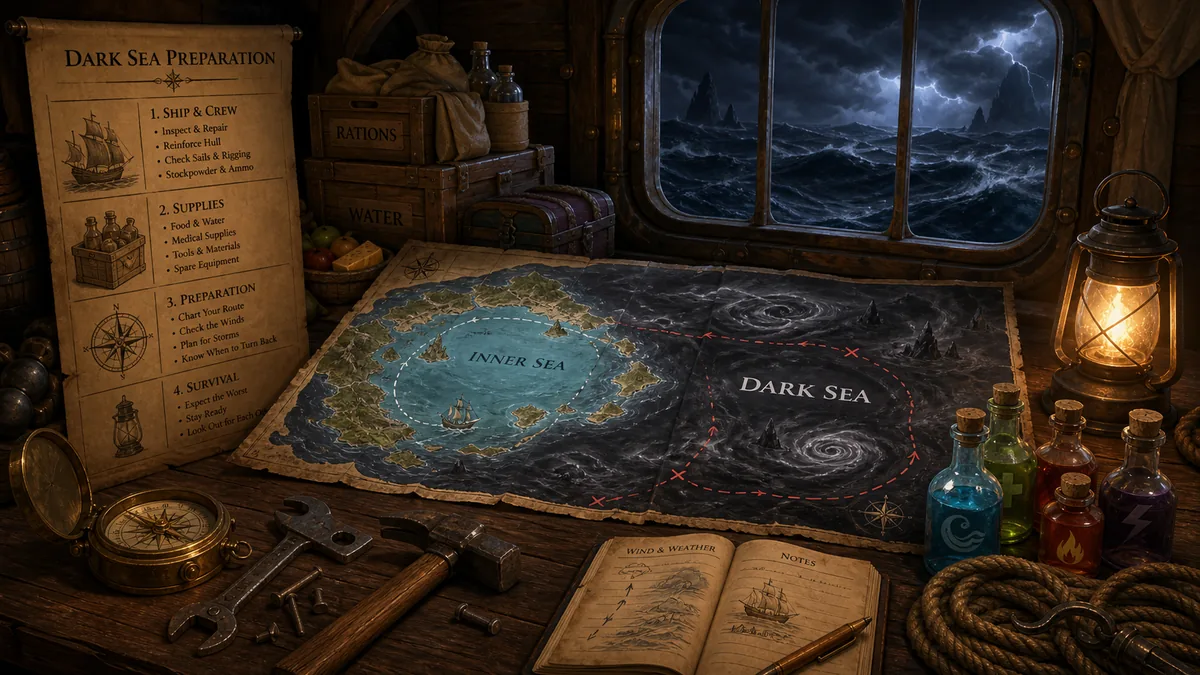
| Prep area | What to check | Why it matters |
|---|---|---|
| Ship durability | Repair supplies, clear return heading, and enough hull health to leave early. | A Dark Sea run only pays if the ship survives the return. |
| Food and recovery | Meals, healing, inventory space, and a plan for when to stop looting. | Sorting inventory during bad weather turns a controlled run into risk. |
| Build comfort | Defense, mobility, damage, and Warding if you intend to push past shallow ranges. | Warding helps with insanity pressure but does not replace ship discipline. |
| Exit condition | Leave after a target chest count, low ship health, poor visibility, or a bad combat chain. | Deciding the exit before entry prevents overextending after a good find. |
If the goal is gear farming, compare your current setup in the Armor Build Calculator before you sail. Warding can help with insanity pressure, but defense, mobility, and damage still matter because hazards do not wait while you repair or sort inventory.
Dark Sea Ranges, Insanity, and How Far to Push
Searchers often ask how deep they should go. The useful answer is: only as deep as your extraction plan allows. Dark Sea risk rises as you move farther out, and insanity pressure becomes a build and comfort check. Deeper does not automatically mean smarter if your ship, Warding, navigation habits, or combat plan cannot support the return trip.
| Range mindset | Best use | Risk note |
|---|---|---|
| Outer edge scouting | First trips, testing visibility, learning weather, and checking one or two targets. | Best for learning because you can reverse course before the run collapses. |
| Moderate push | Island checks, structures, Atlantean encounters, reagents, and Dark Sealed Chests. | Requires better repair habits and a build that can survive mistakes. |
| Deep run | Advanced reward hunting after shallow routes feel routine. | Only push when the ship, Warding plan, route memory, and session time all support extraction. |
Newer players should think in scouting loops: enter, observe weather and visibility, check one or two targets, then leave. Advanced players can push deeper, but the same rule still applies. The moment ship health, inventory, Warding comfort, or route memory becomes questionable, the run has changed from farming to gambling.
Dark Sea Loot and Dark Sealed Chests
Dark Sealed Chests are the headline reward for many Dark Sea runs because they can contain Dark Sea-specific loot, gear, scrolls, ship parts, and other valuable rewards. The catch is that getting the chest is only part of the job. You need to bring it out and open it after leaving the Dark Sea, so a small controlled haul can be more valuable than a risky pile.
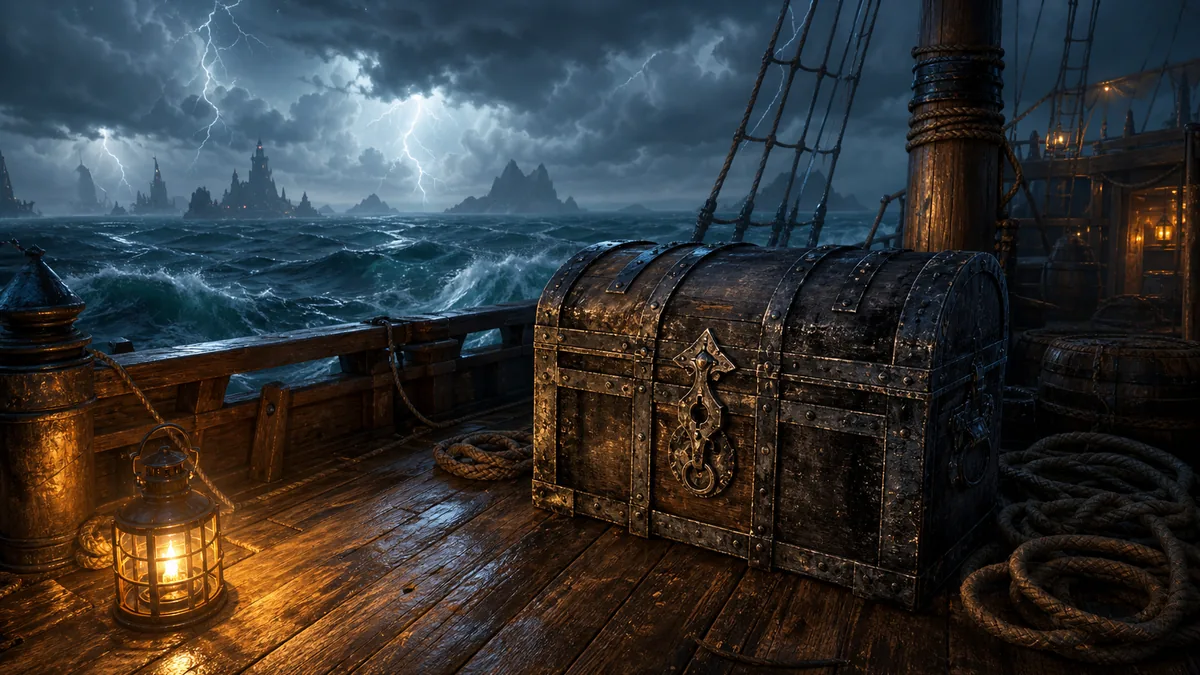
| Reward type | Where it fits | How to treat it |
|---|---|---|
| Dark Sealed Chests | Dark Sea structures, Atlantean ships, and other Dark Sea reward routes. | Bring them out safely and open them with a Shipwright after leaving the Dark Sea. |
| Reagents and ingredients | Dark Sea islands, shorelines, bodies, and biome-specific surfaces. | Collect them when nearby, but do not let ingredient hunting break the return plan. |
| Ship parts and scrolls | Reward tables connected to Dark Sea loot and sealed chest openings. | Evaluate after the run so you are not making inventory decisions in danger. |
| Gear sets | Dark Sea reward sources and Dark Sealed Chest openings. | Use the armor calculator before keeping every piece just because it came from a hard run. |
If your main goal is chests, combine this page with the Chest Locations Guide. Normal island chest routes and Dark Sea chest extraction are different problems, but they share one habit: route efficiency matters more than chasing every possible container.
A Safe Dark Sea Run Workflow
A clean run has a beginning, a target, and a return condition. Do not enter the Dark Sea with only a vague goal like "farm until I get something good." That is how players overstay after the run has already become profitable.
- Repair and stock the ship before leaving normal waters.
- Pick a conservative range for the session, especially if you are testing a new build.
- Set a small target: a few island checks, one structure route, or a specific chest count.
- Track your exit direction and avoid drifting deeper without noticing.
- Leave when ship health, inventory, visibility, or combat pressure stops feeling controlled.
- After returning, open or evaluate rewards, then adjust armor stats before the next run.
This workflow is intentionally conservative. The Dark Sea rewards players who can repeat good decisions, not players who win one dramatic run and lose the next three. Once the shallow version feels easy, extend the target slowly.
How This Guide Connects to Other Arcane Tools
Use the Arcane Odyssey Map Guide for normal sea orientation before you leave safe waters, then open the Dark Sea Map and Navigation Guide when the question is keeping your bearings or planning the return. Use the Chest Locations Guide to separate standard chest farming from Dark Sea chest extraction. Use the Armor Build Calculator to compare Warding, defense, power, mobility, and range after you decide how deep you want to go.
If your Dark Sea run produces charts or gear that leads back to normal island routing, the Treasure Chart Locator, Treasure Chart Guide, and Sea Chart Guide can help you turn that loot into a cleaner follow-up route.
Reference Sources Checked
Real first-party Dark Sea screenshots were not safely copied into this repository. I checked official Roblox context, community wiki pages, community discussion, and video results, then used clearly labeled editorial illustrations instead of presenting AI art as real gameplay.
FAQ
How do you enter the Dark Sea in Arcane Odyssey?
Sail outward from the normal War Seas into the dark fog at the edge of the map. Treat the first trip as scouting, not a full loot run.
What should beginners do first in the Dark Sea?
Stay near the edge, learn how weather and visibility feel, check a small number of targets, and leave while the ship is still healthy.
Are Dark Sealed Chests worth farming?
Yes, but only if you can extract them consistently. A small safe haul is better than a large risky haul that sinks before reaching a Shipwright.
Do you need Warding for the Dark Sea?
Warding becomes more valuable as insanity pressure rises. Start shallow first, then add Warding and stronger defensive planning before deeper routes.
Is this a Dark Sea map?
No. Dark Sea routes are better handled as preparation and extraction decisions. Use this page for run planning, not fixed coordinate lookup.
Final Takeaway
The best Arcane Odyssey Dark Sea run is not the deepest run. It is the run where your preparation, range choice, chest target, and exit decision all match. Start shallow, bring the loot home, upgrade the build, then push farther only when the previous route feels controlled.